Begin with a role, not a rarity
Botanical ingredients are not a single flavour category. They may contribute perfume, bitterness, acidity, colour, texture or a combination of these. A petal can be nearly neutral on the tongue yet aromatic as it warms in the mouth. A familiar herb may seem entirely different in a cold cream than in a warm syrup. Useful tasting begins by separating those experiences.
Ask three questions: what does the ingredient smell like, what does it taste like, and what remains after swallowing? “Floral” is a starting point, not a complete description. Rose can suggest ripe fruit and perfume; lavender can become camphoraceous; culinary mint can give a cooling impression. None of those observations is a health claim, and intensity is not the same as quality.
The botanical dessert house earns its distinction through selection and proportion. A well-grown leaf used at the right moment may produce a clearer result than an elaborate blend of extracts. Expensive or unfamiliar ingredients do not automatically offer a more satisfying experience.
Tasting flight / 01
Flowers: aroma with boundaries
Rose & fruit
Food-grade rose preparations can connect berry fruit with dairy, rice or nuts. They should support the fruit rather than announce themselves as perfume. A rose water varies by producer and concentration, so a recipe cannot be transferred blindly from one bottle to another.
Lavender & restraint
Culinary lavender can lend an aromatic edge to cream or honey-based preparations. Too much, or an unsuitable extraction, can seem medicinal or soapy. That sensory description is a reason to rebalance the dessert, not a suggestion that the plant provides a medicinal benefit.
Blossom & context
Elderflower preparations often work with tart orchard fruit. Orange blossom water can frame citrus, almond or a mild custard. These ingredients need contrasting acidity or texture to avoid a flat, uniformly perfumed sweetness.
Tasting flight / 02
Leaves: freshness has several accents
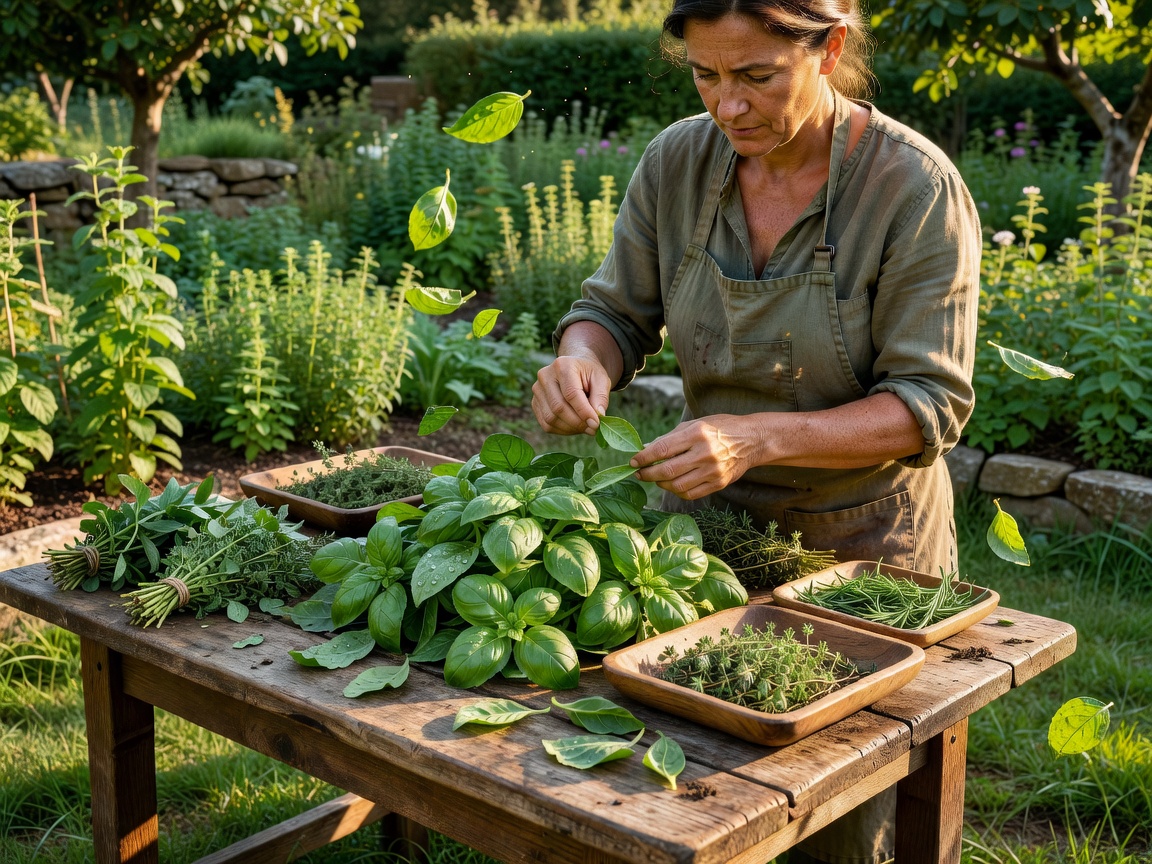
Basil can bring sweet, peppery or anise-like notes, depending on the variety and condition. With strawberry, it can create an aromatic bridge rather than a savoury interruption. Mint often suits chocolate or tart fruit, but its presence should not erase the subtler ingredients around it.
Lemon verbena offers a citrus-like aromatic impression without replacing the acidity supplied by juice or fruit. This distinction is important: something that smells lemony does not necessarily make a dessert taste sharper. Lemon balm has a different profile and should not be treated as a mechanically equivalent substitute.
Freshness also changes with handling. Bruising, prolonged storage and heat can move a leaf away from its garden character. A strong kitchen tests the actual delivery rather than relying on a permanent description of how an ingredient ought to taste.
Stems, seeds and the supporting cast
Botanical thinking extends beyond leaves and flowers. Rhubarb stalks can provide a bright acidic centre; the leaves are toxic and are not a culinary substitute. Fennel seed brings anise-like warmth, while coriander seed can offer citrus-like aromatic notes. Seeds generally need their own preparation logic rather than the brief treatment suitable for a tender leaf.
Plant identity and plant part must travel together. A supplier name alone does not establish that every part of a plant is appropriate to eat. Likewise, food-grade hydrosols, culinary extracts and essential oils are not interchangeable products. This guide does not recommend adding essential oils to food.
Build contrast, then edit
A useful plate has a principal ingredient, a supporting aroma and a reason for each texture. Consider pear, a restrained verbena cream and a crisp oat element. The fruit supplies the centre, the leaf lifts the aroma, and the crisp component prevents the mouthful from becoming uniformly soft. Adding three more herbs may obscure that structure rather than improve it.
Guests can apply the same vocabulary without becoming specialists. Notice whether the aroma arrives before the sweetness, whether the acid refreshes the palate, and whether the final impression remains pleasant. You do not need to identify every plant to recognise a balanced dessert.
Further context
Harold McGee’s On Food and Cooking is a useful foundation for understanding flavour and preparation. Kew’s Plants of the World Online supports botanical nomenclature, but a taxonomic record is not an edibility certificate. For plant-poisoning information, consult a qualified poison information service rather than a culinary description.