A house is more than a visual identity
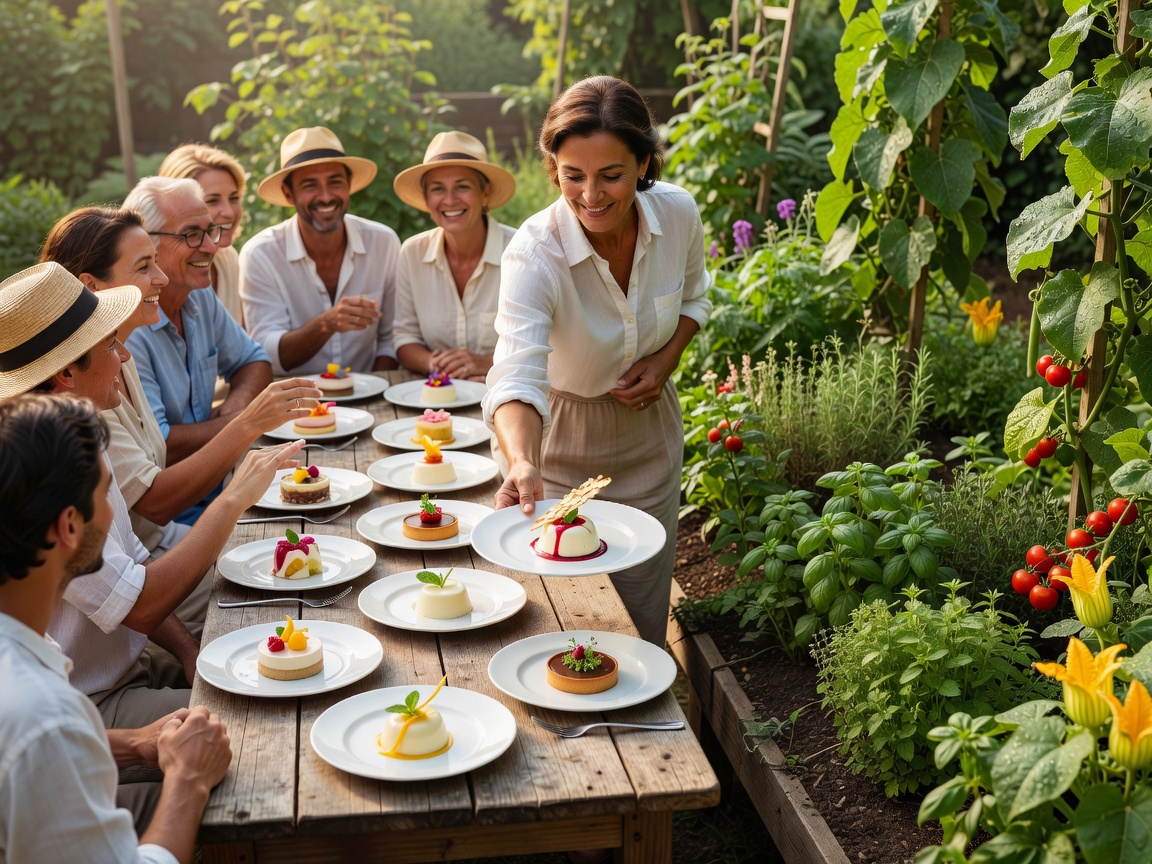
“Botanical dessert house” is a descriptive concept, not a protected certification. It can refer to a pastry shop, an intimate tasting counter, a restaurant’s dessert programme or a destination built around sweet courses. The name alone tells you little about sourcing, technique or the level of hospitality.
A distinctive house has a point of view that survives beyond its photographs. Perhaps it works closely with a culinary herb grower, builds a changing menu around orchard fruit, or explores one aromatic family in depth. What matters is whether that idea improves the food and gives guests a clear understanding of the experience.
Luxury, in this context, is attention made tangible. Clean flavours, a well-judged portion, comfortable pacing and an informed response to an allergy question are more valuable than a spectacular garnish with no culinary role. A modest room can deliver these qualities; an elaborate room can fail to do so.
The sourcing conversation
Ask questions that have useful answers
A guest does not need access to a kitchen’s entire purchasing system. It is reasonable, however, to expect a clear account of how unfamiliar plants enter the menu. Specific, calm explanations are more informative than a general assurance that everything is natural.
| Area | Useful signal | Reason to ask more |
|---|---|---|
| Botanical sourcing | Ingredients supplied for food use; plant identity and edible part understood | Unspecified garden flowers or florist blooms |
| Seasonality | Clear origins and honest use of preserved ingredients | Every ingredient described as freshly local all year |
| Allergens | A direct conversation about ingredients and cross-contact | A broad promise that botanical means allergy-safe |
| Menu format | Course count, inclusions and booking terms explained | Unclear supplements or an undefined tasting duration |
| Substitutions | Alternatives discussed before confirmation | Unfamiliar plants substituted without explanation |
Understand the format you are booking
A counter tasting asks for a different kind of attention from a casual pastry visit. Check whether the experience is a complete meal, a dessert sequence intended after dinner, or a small selection served with drinks. Clarifying this helps you arrive with the right appetite and avoids mistaking a carefully portioned course for poor value.
Ask what the listed price includes, whether pairings are optional, and how much time to allow. We do not publish universal prices or opening hours because those details belong to individual operators and can change. Confirm them directly before travelling, along with cancellation terms and accessibility arrangements.
The physical setting matters too. Counter seats may offer a view of the kitchen but may not suit every guest. Lighting, acoustics, step-free access and seating support can affect comfort more than the rarity of an ingredient. A capable host treats these questions as part of hospitality rather than an inconvenience.
Read craft through the whole plate
Look for relationships rather than technical vocabulary. Does a floral cream make sense beside the fruit? Does a crisp element retain its texture? Is the plate balanced at its actual serving temperature? A long list of preparations is not proof that the dessert is complete.
A house can demonstrate skill through simplicity. An accurately baked tart with a restrained herb accompaniment may demand more judgement than a crowded composition. Conversely, complexity can be rewarding when each component contributes something distinct and the guest can still perceive a central idea.
Before you arrive
Make the important details explicit
Tell the venue about allergies and dietary requirements before booking, not only when the first course appears. Ask whether it can accommodate your needs and whether cross-contact risks remain. A refusal can be a responsible answer when the kitchen cannot safely provide the requested adaptation.
Botanical does not mean vegan, gluten-free or alcohol-free. Cream, eggs, nuts, wheat, gelatin and alcohol may appear in familiar pastry components or aromatic preparations. The same care applies to drinks, petits fours and garnishes that might not feature prominently in a menu description.
If a particular plant raises a concern for you, seek individual advice from an appropriate healthcare professional. The service team should explain ingredients but should not be expected to make medical recommendations.
Learn from real institutions without borrowing their reputation
Botanical gardens such as the Royal Botanic Gardens, Kew, and the Jardin des Plantes in Paris illustrate the importance of precise plant identity. Pastry houses such as Pierre Hermé Paris and Maison Lenôtre offer widely documented examples of pastry as a disciplined craft. These are contextual references, not claims that their menus match our concept or that they endorse this site.
For food information, the European Food Safety Authority, Germany’s Federal Institute for Risk Assessment and the European Commission provide more appropriate starting points than social-media claims. EU Regulation 1169/2011 addresses food information, including allergen communication, while Regulation 852/2004 concerns food hygiene. Their presence in a conversation should support practical care, not replace it.
Ultimately, choose a house whose explanations are as considered as its plates. A guest should leave remembering flavour, texture and welcome—not wondering what an unexplained plant was doing on the dessert.