The harvest sets the terms
A considered house makes room for change without making the guest feel that something is missing.
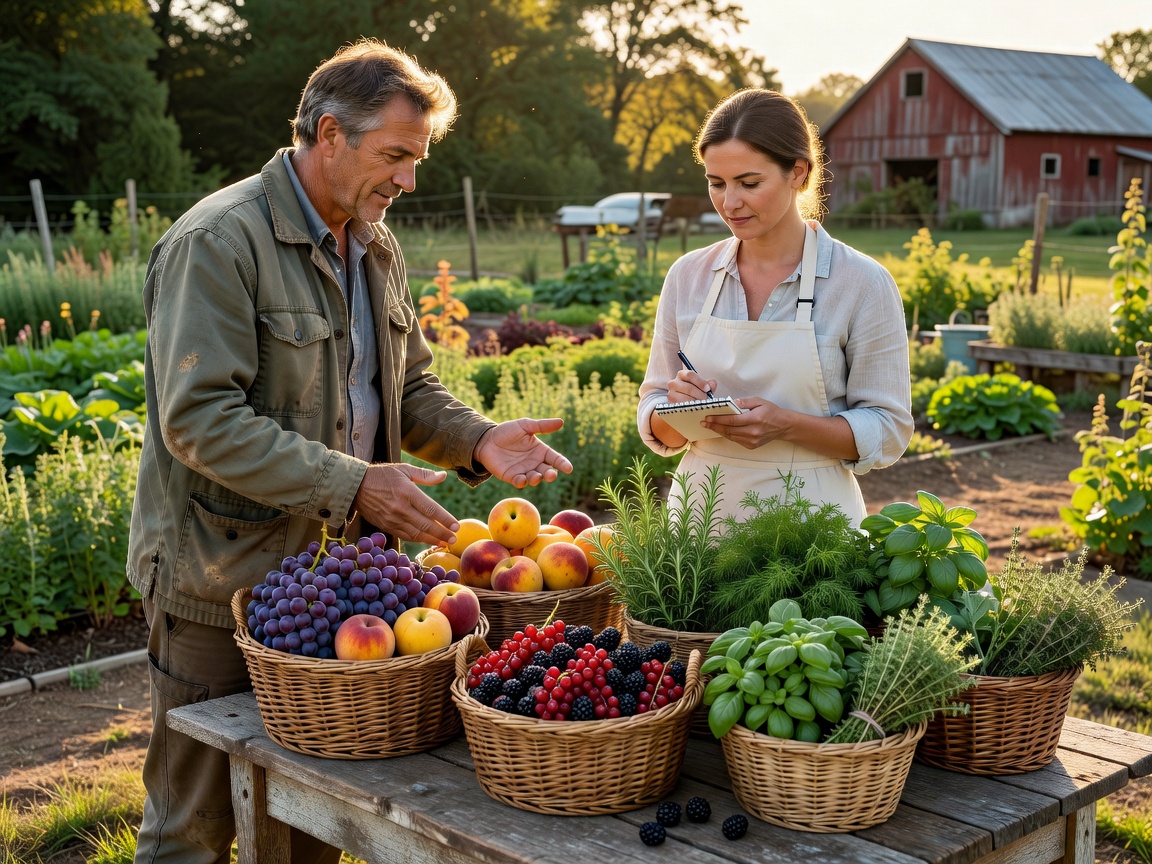
A seasonal botanical menu begins with the place where its ingredients grow. Hamburg does not share a harvest calendar with Provence, and a protected greenhouse does not follow the same rhythm as an exposed field. Weather can shift a crop’s arrival or shorten the period when its quality is at its best. A fixed date is therefore a poor substitute for a conversation with a grower.
Seasonality also includes stored and preserved ingredients. An autumn pear, a carefully managed fruit preparation or a dried culinary herb can have a legitimate place on a winter menu. The useful question is not whether every component was picked that morning, but whether the kitchen is honest about the ingredient’s origin, condition and treatment.
For guests, this approach produces menus with a recognisable point of view rather than an exhaustive catalogue of plants. For kitchens, it requires flexibility: a planned substitution, a clear briefing and an understanding of which element gives each dessert its identity.
Four seasonal readings
Change the structure, not just the garnish
Spring
Tender culinary herbs and tart rhubarb stalks suggest a lighter opening. A small baked element with gently infused cream can provide warmth without making the plate heavy. The botanical note should feel precise rather than aggressively green.
Spring is also a useful reminder that edible parts matter. Rhubarb leaves are toxic and do not belong in the kitchen’s edible-leaf collection. Seasonal enthusiasm must not blur the difference between a familiar crop and every part of that plant.
Summer
Ripe berries and stone fruit can carry much of the flavour themselves. Basil, mint or a restrained floral preparation may offer an aromatic counterpoint. A chef should taste the fruit first: its sweetness and acidity determine how much intervention is necessary.
Frozen components can make a sequence refreshing, but repeated sorbets may flatten the rhythm. Contrast one cold course with a crisp tart or a room-temperature cake element, and pay attention to how quickly everything changes in a warm dining room.
Autumn
Pears, apples, nuts and deeper caramel notes allow a more grounded register. A controlled herb infusion can keep a rich dessert articulate, while seed-based aromatics can link orchard fruit to toasted pastry. Richness still needs an edge of acidity or a measured portion.
Fresh and preserved ingredients can sit together without apology. The important distinction is between a deliberate larder and a vague claim of freshness. Good menu language gives the guest a truthful expectation.
Winter
Citrus, stored orchard fruit and carefully selected dried botanicals can offer contrast to butter-rich pastry. A warm component may be welcome, but a winter dessert does not need to be uniformly dense or heavily spiced.
The botanical contribution may become quieter: a trace of culinary rose in a fruit preparation or a seed aroma in a crisp biscuit. Restraint is especially useful when several courses have already introduced toasted, roasted or caramelised flavours.
A menu is a sequence
Give the palate a beginning and an ending
A short tasting can begin with an acidic, fruit-led mouthful, develop through a fuller pastry course and finish with a small, clear aromatic impression. This is a design principle, not a compulsory order. The best sequence responds to the size of the portions, the drinks and the time guests have available.
Repetition can be intentional, but it should be perceptible as development. If every course contains a foam, a quenelle and scattered petals, the experience may become visually and texturally uniform even when the ingredient names change. A different serving vessel cannot solve the same repeated mouthfeel.
Portioning matters as much as composition. A dessert that feels balanced in two spoonfuls may become tiring in a larger bowl. Testing the whole sequence is therefore more informative than tasting each plate on a separate afternoon.
Design drinks with the same care
A non-alcoholic pairing should have a purpose beyond sweetness. Tea, a fruit-based drink or a culinary herb preparation can change the perceived finish of a dessert. Too much sugar in both glass and plate can overwhelm a delicate floral note.
Ask about caffeine, alcohol, allergens and any unfamiliar botanical ingredients before ordering. “Natural” does not mean suitable for everyone. A good team welcomes these practical questions and explains available alternatives without making health promises.
Let the menu tell the truth
Useful descriptions name the principal ingredients and avoid claiming a local harvest where imported produce is involved. They also leave room for responsible substitution. If a grower cannot provide a suitable edible flower, a dessert can be served without it or redesigned; an unknown decorative substitute is not an acceptable solution.
For background on seasonal growing, the Royal Horticultural Society offers practical horticultural information, while the German Federal Centre for Nutrition, BZfE, provides food and seasonal-produce resources. Neither replaces the specific sourcing and food-safety work of a professional kitchen.
Choose a house with confidence