Read the ingredient before writing the recipe
A formula provides structure. The delivery in front of the chef provides the final instructions.
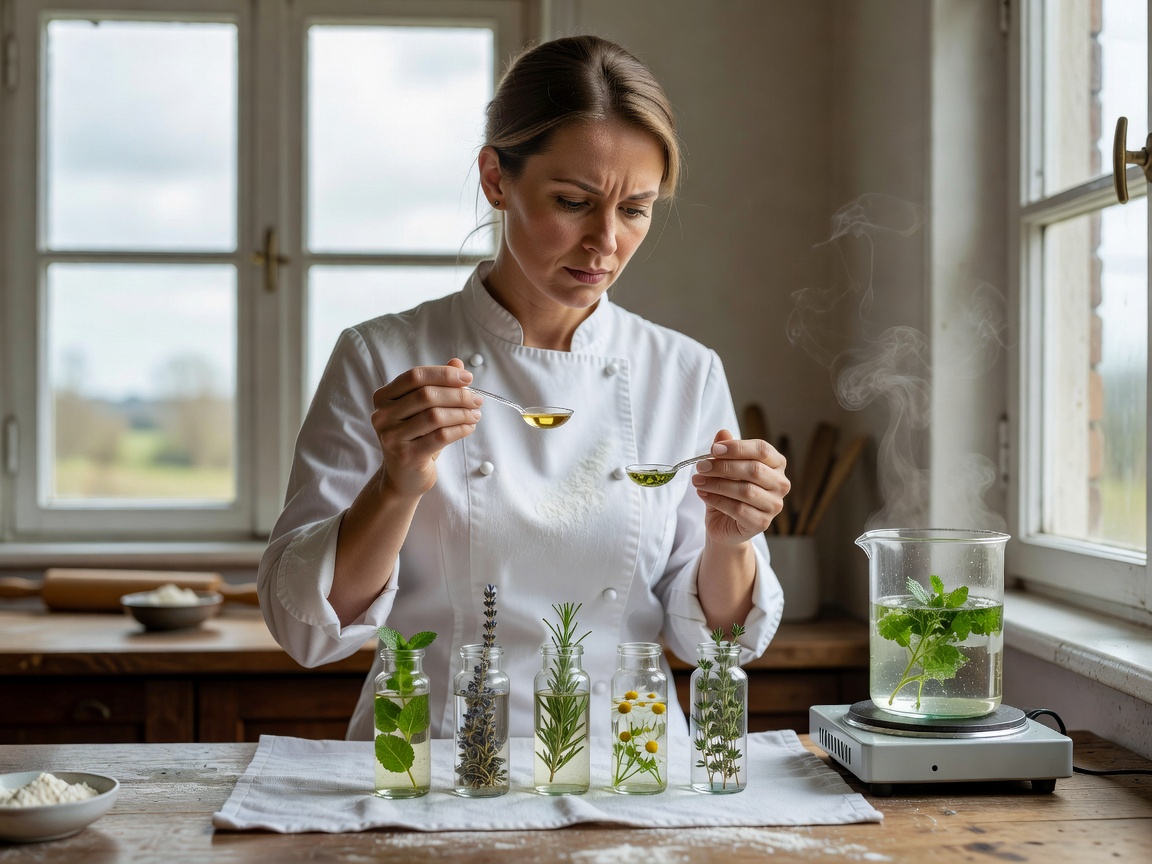
Botanical pastry starts with observation. Leaves from a hot growing period may not have the same aromatic intensity as a previous delivery. A dried flower and a fresh flower behave differently. Even a familiar culinary preparation can vary between producers. Before scaling a batch, the pastry team needs a small, controlled assessment of the ingredient it will actually use.
That assessment is separate from a food-safety check. Smelling something pleasant does not establish that it is safe to eat. The ingredient must already have an appropriate food-use identity and sourcing history. Only then does the sensory work begin: aroma, bitterness, colour and the likely effect of heat or holding time.
Good notes make this process repeatable. Record the supplier, delivery date, ingredient condition, extraction method and tasting result. Precision here is not theatre. It allows another cook to understand why a preparation worked and what should change when the next harvest arrives.
Process sequence / Extract, build, finish
Three moments that shape the plate
Extraction is a choice of emphasis
Infusion transfers selected aromatic qualities into a liquid or fat-containing base. Warmth can accelerate extraction, but more heat or more time does not always produce a better flavour. A prolonged treatment may draw out bitterness, dull a fresh note or create a different aromatic profile. Cold extraction can offer another route, but it still requires controlled refrigeration and a validated handling process.
The receiving medium matters. Cream, water and syrup do not carry every aromatic compound in the same way. A chef may find that an herb feels rounded in dairy but thin in a water-based preparation. Those differences are reasons to test, not grounds for a universal rule that one medium is always superior.
This editorial guide deliberately avoids fixed infusion temperatures and storage periods. Safe parameters depend on the preparation, equipment, subsequent processing and the kitchen’s food-safety system. A pleasant taste does not validate a storage method, and an infusion does not automatically preserve a fresh plant ingredient.
Balance aroma against sweetness and acid
Sugar does more than sweeten: it affects body, freezing behaviour and texture. Removing it without reformulating can make a frozen dessert hard or change the way a cream sets. Conversely, excess sweetness can suppress the clarity that made a botanical ingredient worth using. Restraint means finding a functional balance, not simply declaring a dessert low in sugar.
Acidity can sharpen a fruit centre and make a rich component feel less heavy. Fat can lengthen aromatic perception and soften some edges. Salt may improve definition in a supporting crumb or caramel. These effects interact, so a chef should taste the assembled spoonful rather than approve each component in isolation.
The quiet architecture
Texture gives aroma somewhere to go
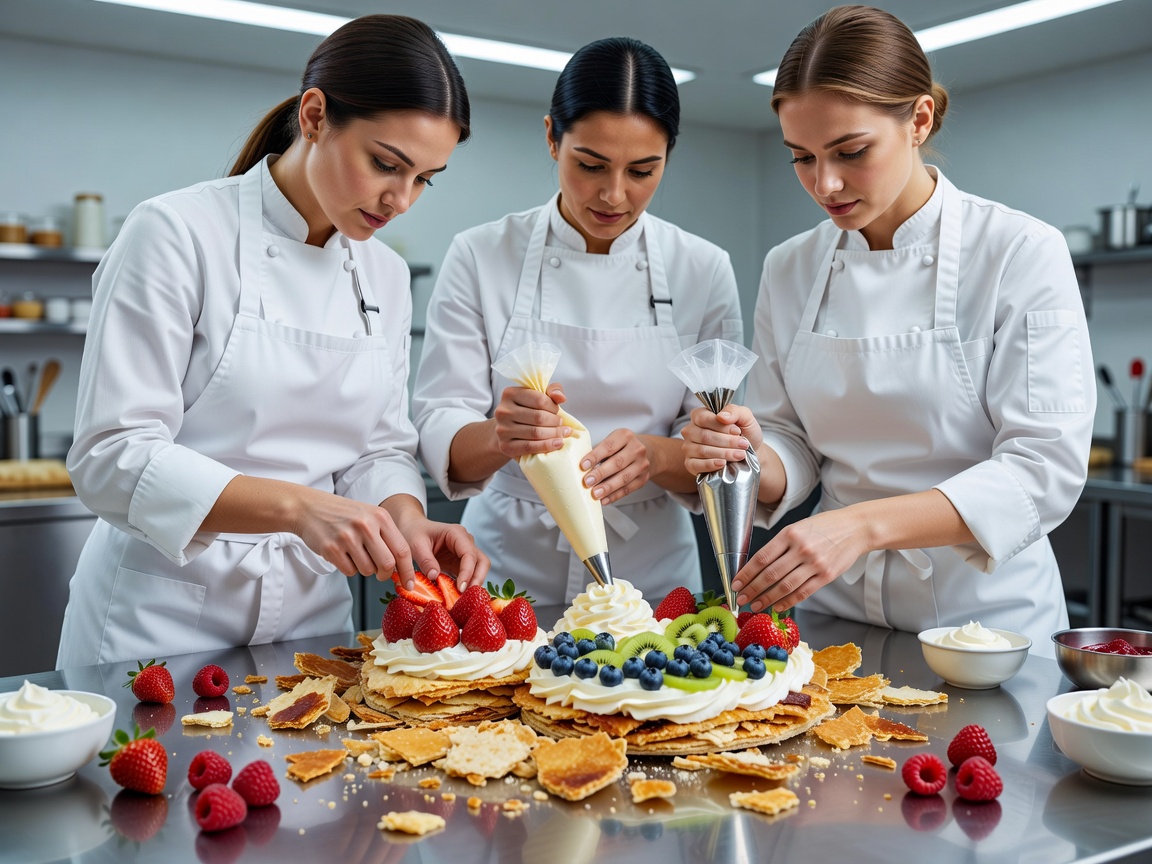
Imagine a soft fruit compote, an airy cream and a tender sponge. The flavours may work, yet the mouthful can lack direction because every element yields in a similar way. A thin biscuit or a carefully placed crumble can provide definition. That crispness must survive contact with moisture long enough to reach the guest.
Temperature changes the experience too. A deeply frozen element may reveal less aroma at first than a gently chilled cream. A warm sauce can alter nearby textures in seconds. The service team therefore needs a shared understanding of how quickly the plate should travel and which element the guest might taste first.
Finish with explanation, not distraction
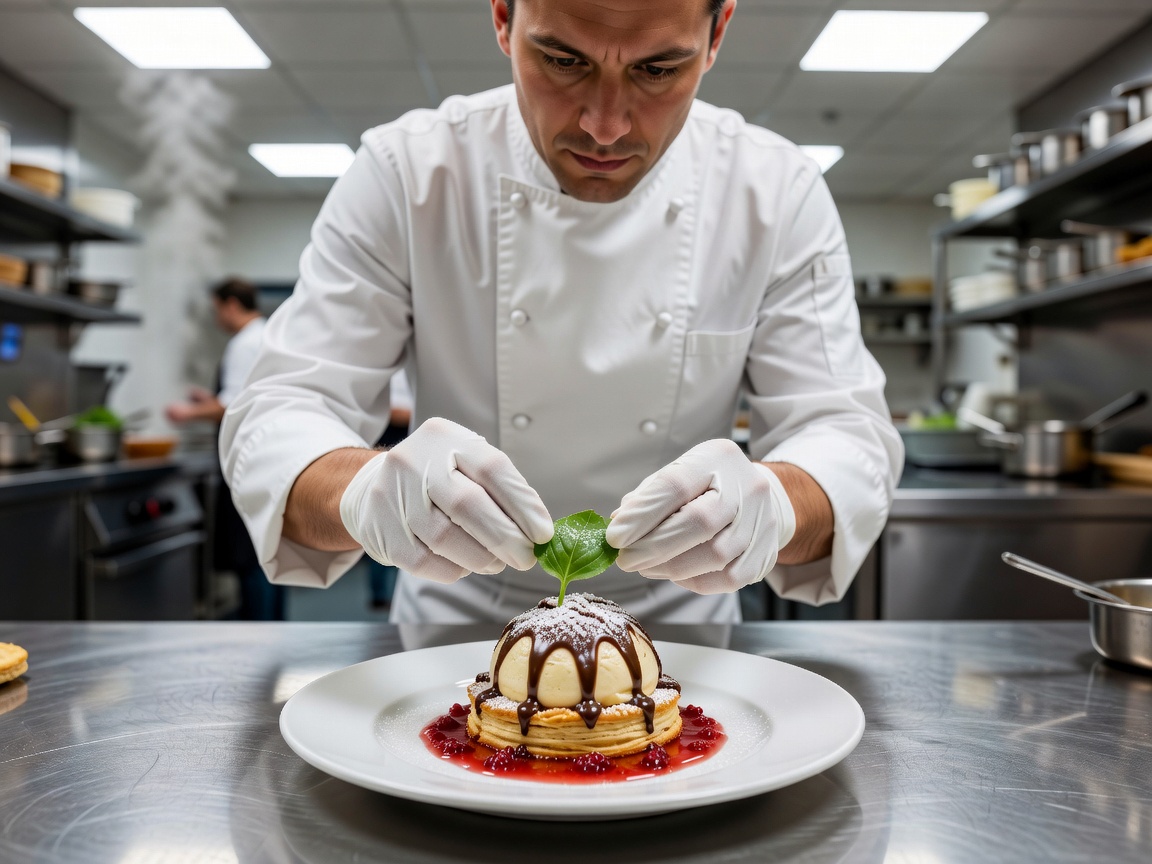
A botanical garnish should have a purpose. It might repeat the principal aroma, introduce a contrast or provide a delicate texture. It should never be present merely because the plate has an empty space. The same standard applies to smoke, elaborate vessels and tableside pouring: they should improve the experience rather than conceal an ordinary dessert.
A brief service explanation can be enough: the central fruit, the principal botanical and the intended order of tasting. Guests who want more detail should be able to ask. Guests who prefer to enjoy the plate quietly should not have to attend a technical presentation.
Useful technical reading
Harold McGee’s On Food and Cooking explains many underlying food transformations. The Codex Alimentarius General Principles of Food Hygiene provides a broader foundation for hygiene and HACCP thinking. Neither replaces the controls required for a particular kitchen or recipe.
Put technique into a seasonal menu